Soma by Faith Lantz · Central, Hong Kong

Craniosacral Therapy in Hong Kong

A gentle, deeply attentive hands-on therapy that works with the body's own rhythms. It releases tension held in the nervous system, the tissues, and the bones of the skull and spine.

Book a Session
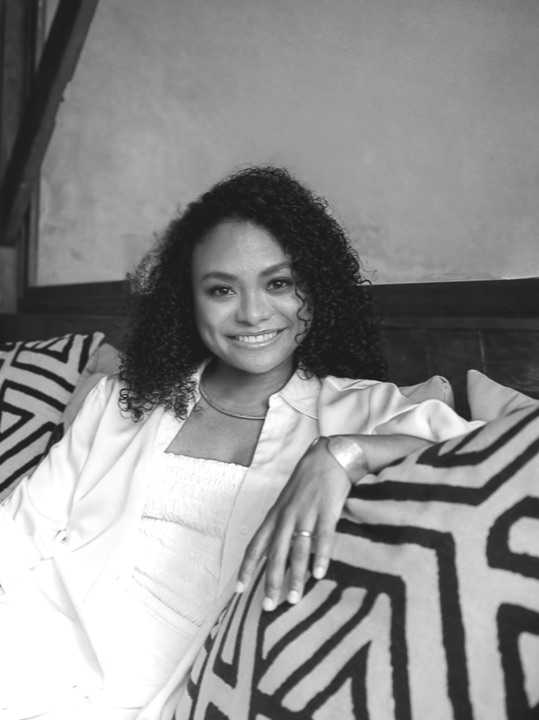
Faith Lantz, craniosacral therapist, Central Hong Kong
At a Glance

Craniosacral therapy is a light-touch, fully clothed bodywork that listens to subtle rhythms in the body, particularly around the skull, spine, and sacrum, to release deep patterns of tension and help the nervous system find rest.

How Craniosacral Therapy Came to Be

The story begins with a medical student staring at a disarticulated skull in 1899 and asking a question nobody was asking: what if the bones of the skull can actually move?

At the turn of the twentieth century, anatomy textbooks taught (as they still largely do today) that the bones of the adult skull are fused and immobile. William Garner Sutherland, then a student of osteopathic founder Andrew Taylor Still, looked at a disarticulated skull and noticed something that stopped him cold: the bevelled edges of the temporal bone looked, unmistakably, like the gills of a fish. Designed, it seemed, for motion.

This observation lodged in him. Over the following decades, Sutherland conducted exhaustive experiments, including, famously, on himself. He fashioned a helmet with adjustable screws that could restrict movement in different cranial bones, wore it for weeks at a time, and meticulously recorded the neurological and physical effects. His wife served as witness and note-taker. The results were unambiguous: restricting specific cranial bones produced specific, repeatable symptoms; releasing the restriction resolved them.

William Garner Sutherland, DO
1873 – 1954

The founder of cranial osteopathy, Sutherland spent over four decades developing what he called the Primary Respiratory Mechanism: the idea that the brain and spinal cord have an inherent rhythmic motion, independent of breathing and heartbeat, that expresses through the whole body. He named this deeper rhythm the "Breath of Life." In his later years, Sutherland moved beyond the mechanical model and became increasingly drawn to the spiritual dimension of this work, the idea that there was an ordering intelligence in the body's rhythms, something beyond anatomy.

Sutherland's work remained largely within osteopathic circles until the 1970s, when two parallel developments changed everything. The first was the work of Viola Frymann, DO, who in 1966 conducted a landmark study of 1,250 newborns, examining cranial strains and their relationship to birth difficulties. Her findings showed that a significant proportion of newborns had cranial strain patterns that could be addressed with gentle cranial work, often with immediate improvements in feeding, sleeping, and irritability. This opened the door to paediatric cranial therapy.

The second was John E. Upledger's moment in a surgical suite in 1975. Upledger, then assisting a spinal surgery, was asked to hold the membrane surrounding the spinal cord still while the surgeon worked. He found he could not: there was an unmistakable rhythmic motion, roughly ten cycles per minute, that he had no anatomical explanation for. That observation sent him back to Sutherland's work and, eventually, to Michigan State University, where he spent eight years leading a team of scientists investigating craniosacral physiology.

John E. Upledger, DO, OMM
1932 – 2012

Upledger's research at Michigan State University (1975–1983) produced a detailed physiological model of what Sutherland had called the Primary Respiratory Mechanism. Where Sutherland had worked largely in the language of osteopathic art, listening, intuiting, treating, Upledger built a system of palpable landmarks, codified techniques, and reproducible clinical protocols. He founded the Upledger Institute in 1985, which has since trained practitioners in over eighty countries. He also co-developed SomatoEmotional Release (SER) with biophysicist Dr. Zvi Karni, a technique for working with the emotional and psychological dimensions of physical holding patterns.

These two lineages, Sutherland's contemplative tradition and Upledger's technique-based clinical model, eventually grew into the two distinct schools of craniosacral therapy that practise today. Understanding the difference between them is genuinely useful if you are considering working with a craniosacral therapist.

How Craniosacral Therapy Works

At its core, craniosacral therapy works by listening. With trained hands placed very lightly on the body, the practitioner follows a subtle rhythmic motion that pulses through the central nervous system and gently supports the body in releasing what is restricting that motion.

The craniosacral system consists of the brain and spinal cord, the membranes that surround and protect them (the meninges), the cerebrospinal fluid (CSF) that bathes and nourishes them, the bones of the skull, and the sacrum (the triangular bone at the base of the spine). This system is enclosed: the brain and spinal cord sit inside a hydraulic membrane, and the rhythmic production and reabsorption of CSF creates a measurable pressure fluctuation that expresses as subtle movement throughout the whole body.

This rhythm, often called the CranioSacral Rhythm (CSR), moves at roughly six to twelve cycles per minute, much slower than heartbeat or breathing. It can be felt not just at the skull and sacrum, but throughout the entire fascial system, the continuous web of connective tissue that runs from the soles of the feet to the crown of the head, wrapping around every muscle, organ, nerve, and bone. A skilled practitioner can palpate this rhythm with a contact as light as five grams of pressure, roughly the weight of a small coin.

When the body holds tension, from old injury, stress, emotional overwhelm, birth trauma, postural strain, or any experience the nervous system could not fully process at the time, that tension creates restrictions in the fascial and membranous system. These restrictions show up as asymmetry in the CSR: one side moving more freely than the other, a reduced amplitude, an altered quality. The practitioner notices this, holds a listening contact with the restricted area, and waits. What follows is often called an "unwinding": the tissues soften, the restriction releases, and the rhythm re-establishes its natural amplitude and symmetry.

Key concepts

CranioSacral Rhythm (CSR)

The subtle rhythmic motion produced by the production and reabsorption of cerebrospinal fluid. It moves at 6–12 cycles per minute, slower than heartbeat or breathing, and can be felt throughout the body. Asymmetry in this rhythm guides the practitioner to areas holding restriction.

Primary Respiratory Mechanism (PRM)

Sutherland's term for the whole system producing this rhythm: brain motion, CSF fluctuation, sacral movement, and meningeal tension. It is called "primary" because it underlies and influences all other physiological systems. It is more fundamental than the breath.

Fascial Release

The fascia is a continuous web of connective tissue that holds every structure in the body in relationship. Restrictions in the fascia, from injury, posture, or unprocessed experience, limit movement, create pain, and compress nerves and organs. Craniosacral work releases fascial restrictions by listening to and following the tissue's own softening impulse.

Vagal Activation & the Still Point

One of craniosacral therapy's most reliable effects is a shift from sympathetic (fight-or-flight) to parasympathetic (rest-and-digest) activation. A "Still Point," a momentary pause in the craniosacral rhythm, is one of the most powerful tools for inducing this shift, and often produces an immediate sensation of deep rest or release.

The five grams of pressure used in craniosacral work is not arbitrary. It is light enough to avoid triggering the body's protective guarding response, which would cause tissues to tighten rather than release. This is why the work often feels like "almost nothing" to the client while producing effects that feel very significant.
The Two Branches of Craniosacral Therapy

Craniosacral therapy today exists in two distinct schools that share common roots but differ in philosophy and approach. Understanding the difference helps you choose, and helps you understand what you are receiving.

Biodynamic CST
The Listening Tradition

Biodynamic Craniosacral Therapy (BCST) follows the original lineage of Sutherland's work, developed further by Rollin Becker, DO, a deeply contemplative osteopath who refined Sutherland's Breath of Life concept, and brought into its current form by James Jealous, DO, in the 1970s and 80s. Franklyn Sills subsequently brought BCST to international training via the Karuna Institute in the UK, and his books Craniosacral Biodynamics Vol 1 (2001) and Vol 2 (2004) remain the definitive texts.

The defining feature of this tradition is its orientation: the practitioner does not do things to the body. Instead, they cultivate a quality of open, neutral attention, a deep stillness, and listen. The body, in the presence of this quality of listening, reorganises itself. The practitioner is not the agent of change; the body is.

  • Long Tide & Mid Tide: slower, more profound expressions of the primary respiratory rhythm beneath the faster Cranial Rhythmic Impulse. The practitioner learns to listen at all three levels.
  • Breath of Life: Sutherland's term for the ordering intelligence expressed in the body's rhythms. The biodynamic tradition takes this seriously as a spiritual concept: there is a health in the body that is always present, even in illness.
  • Stillness as the primary tool: the practitioner's inner stillness is not preparation for the work. It is the work. Sessions can feel extraordinarily quiet, with very little palpable "doing." The effects are often significant.
Upledger CST
The Clinical Tradition

Upledger CranioSacral Therapy was developed by John E. Upledger, DO, out of his research at Michigan State University (1975–1983). Where the biodynamic tradition is contemplative and process-led, Upledger CST is systematic: specific techniques, codified protocols, reproducible entry points.

This has made Upledger CST significantly more accessible to conventionally trained practitioners and more integrated into hospital and clinical settings, where reproducibility and protocol matter.

  • CV-4 (Compression of the Fourth Ventricle): gentle compression of the base of the skull that induces a Still Point: a profound reset of the central nervous system. One of the most widely used techniques in the whole field.
  • Diaphragm Releases: working through the respiratory diaphragm, thoracic inlet, and pelvic diaphragm to release layers of tension from the body's core.
  • SomatoEmotional Release (SER): co-developed with biophysicist Dr. Zvi Karni. SER works with "energy cysts," areas where the body has isolated injury or trauma to protect the organism from its full impact. SER creates conditions for the body to discharge these held patterns, often with accompanying emotional or sensory release.
  • L5-S1 Decompression: working at the lumbosacral joint to release compression patterns that affect the whole spine and pelvic floor.

Training: the Upledger Institute offers standardised certifications (CST1 through Advanced CST), making training progression clear and credentials legible across clinical contexts.

How Faith Integrates Both

Faith trained in Upledger CST and holds deep exposure to biodynamic principles. In practice, sessions draw on both traditions. This integration is, she believes, where the richest work happens.

Upledger techniques provide structure and reliable entry points: when a client arrives with a specific issue, jaw tension, headaches after a concussion, pelvic floor holding, there are clear, researched techniques to work with. The structure gives sessions direction and gives clients something to understand and track.

Biodynamic listening provides the quality of presence that makes the work go deeper than technique alone. The practitioner's inner stillness, the ability to genuinely listen rather than perform, is what creates the conditions in which the body will actually release. Without it, even the most correct technique lands in a body that is bracing against being worked on.

Faith follows what the session calls for. Sometimes that is specific technique. Sometimes it is long minutes of pure listening. Often it is both, in the same hour.

What the Science Shows

Research on craniosacral therapy is growing. The evidence base is strongest for pain, headache, and nervous system regulation, and researchers are increasingly interested in its role in early childhood development.

Craniosacral therapy occupies an interesting position in the research world. The core physiological claims, that there is a measurable craniosacral rhythm, that it is affected by restrictions in the fascial and membranous system, and that it can be reliably palpated by trained practitioners, have been both supported and questioned by different research groups. The clinical evidence, however, is more consistent: multiple studies show meaningful improvements in pain, headache frequency, anxiety, and quality of life.

Upledger & Vredevoogd 1983
Craniosacral Therapy — Michigan State University Research
The foundational research establishing the physiological basis of CranioSacral Therapy. Upledger's team at MSU documented the craniosacral rhythm in controlled laboratory conditions and developed a systematic model of how restrictions form and can be resolved. This research formed the basis of the Upledger Institute's training curriculum.
Viola Frymann, DO 1966
Relation of Disturbances of Craniosacral Mechanisms to Symptomatology of the Newborn — Study of 1,250 Infants
One of the most cited studies in the field. Frymann examined over 1,250 newborns and found that a significant proportion showed cranial strain patterns related to birth complications. Gentle cranial intervention was associated with improvements in feeding, sleeping, and irritability. This study opened the field of paediatric cranial work.
Haller, Lauche, Cramer, Dobos, Langhorst 2016
Craniosacral therapy for the treatment of chronic neck pain — A randomized sham-controlled trial
A well-designed randomised controlled trial showing statistically significant improvements in neck pain intensity and mobility in the CST group compared to sham treatment. Notable because it used a sham comparator, addressing one of the common methodological critiques of bodywork research.
Haller et al. 2019
Effectiveness of craniosacral therapy: A systematic review and meta-analysis
A systematic review of ten randomised controlled trials found moderate evidence supporting CST for pain intensity and functional disability compared with sham treatment and treatment as usual. The authors noted the need for higher-quality trials but concluded there was meaningful clinical signal in the existing data.
Stephen Porges 1994 – present
Polyvagal Theory — Neurophysiological Foundations of Emotions, Attachment, Communication, and Self-Regulation
While not specifically about craniosacral therapy, Polyvagal Theory provides the strongest current neurophysiological framework for why it works. Porges's research shows that the vagus nerve is directly involved in physiological state regulation, social engagement, and the body's response to threat. Craniosacral therapy works extensively with the structures the vagus nerve passes through, the occiput, the jugular foramen, the thoracic region, and its effects on nervous system regulation map closely onto polyvagal mechanisms.
Castro-Sánchez et al. 2011
Craniosacral therapy for the treatment of chronic low back pain — A randomized controlled clinical trial
RCT of 64 patients with chronic low back pain, finding significant improvements in pain, functional disability, and quality of life in the CST group, with effects persisting at twelve-week follow-up, suggesting durable rather than transient benefit.

A note on evidence. Craniosacral therapy is not a first-line medical treatment, and it is not a substitute for medical diagnosis or care. The research base, while growing, remains modest by the standards of pharmaceutical research. Most studies involve small sample sizes, and methodological quality is variable.

What the evidence consistently shows is that craniosacral therapy is safe, that practitioners can be reliably trained in its techniques, and that clinically meaningful changes in pain, nervous system regulation, and quality of life are documented in multiple independent studies. The mechanism is still debated. The clinical effect is less so.

The Spiritual Dimension of This Work

Sutherland did not stay at mechanics. In his later years, he described something he could not explain anatomically: an intelligence in the fluid tide that seemed to know where to go. He called it the Breath of Life.

Craniosacral therapy sits in genuinely interesting territory. It is grounded in anatomy and physiology, in the mechanics of the craniosacral system, in measurable rhythms, in verifiable clinical outcomes. And yet its founders, to a striking degree, also described encountering something that exceeded those frameworks.

Sutherland spent the last fifteen years of his life grappling with what he was feeling under his hands. The rhythm he had spent decades mapping seemed, at its deepest level, to carry not just information about restriction and holding but something more like an ordering intention. He began using the language of vitalism, the idea that living systems are animated by a principle that cannot be fully reduced to chemistry and physics. He described the cerebrospinal fluid as carrying "the Breath of Life": not metaphorically, but as a literal description of something he experienced clinically, session after session.

"Keep your eye on the tide."

William Garner Sutherland, DO, to his students

Rollin Becker, DO, perhaps the most gifted of Sutherland's students, went further. Becker described the practitioner's role as one of "biodynamic listening": not imposing, not fixing, not even guiding, but meeting the body with the quality of attention that allowed the body's own intelligence to complete what it already knew how to do. His collected lectures, published posthumously in Life in Motion and The Stillness of Life, remain the most nuanced account of what it actually feels like to practise this work at depth.

The concept of the Still Point carries this dimension particularly clearly. A Still Point is a moment when the craniosacral rhythm pauses, completely, for anywhere from a few seconds to a few minutes. In Upledger's clinical model, it is a technique for resetting the nervous system; in the biodynamic tradition, it is something closer to a moment of grace, an instant when the body steps out of its habitual patterning and reorganises around a deeper health. Many clients describe Still Points as among the most significant experiences of their lives: a felt sense of having come home to themselves.

The concept of inherent health is central to the biodynamic tradition, and worth understanding clearly: it is the observation that the body's health is not destroyed by illness, injury, or trauma. It is obscured by it. The practitioner is not restoring what was lost but contacting what was always there, beneath the restriction. This is not a spiritual claim about the universe. It is a clinical observation about what happens in sessions, reported consistently across lineages and cultures: when you listen to a body with sufficient depth and neutrality, you encounter something that is not sick, not damaged, not stuck. Something that has always been whole.

Faith holds this dimension of the work seriously. It informs her presence in sessions more than any technique does.

How Faith Practises

Faith Lantz brings Upledger training and biodynamic sensibility to every session, offering clear technique grounded in a quality of presence that makes the work land differently than most bodywork.

Faith began her journey into somatic work through her own body, through years of movement, Rebirthing Breathwork, and the gradual understanding that what lives in the nervous system cannot be thought or willed away. It has to be met. Craniosacral therapy became, for her, the most precise and respectful language she had found for that meeting.

She trained in Upledger CranioSacral Therapy with the Upledger Institute, completing CST1 and CST2 and holding Upledger certification. Her biodynamic exposure comes through deep reading of the lineage, mentorship, and years of practice that have oriented her as much toward listening as toward technique.

She works with adults, with chronic pain, burnout, nervous system dysregulation, trauma histories, headaches, jaw tension, and the kind of exhaustion that sleep doesn't fix. She also works with babies and mothers through MotherBody: CST for newborns, particularly around birth-related cranial strain, feeding difficulties, and the nervous system settling of the early weeks.

Sessions are seen in Central, Hong Kong.

Upledger CST1 & CST2 Upledger Certified Biodynamic Principles SomatoEmotional Release MotherBody: Infant CST
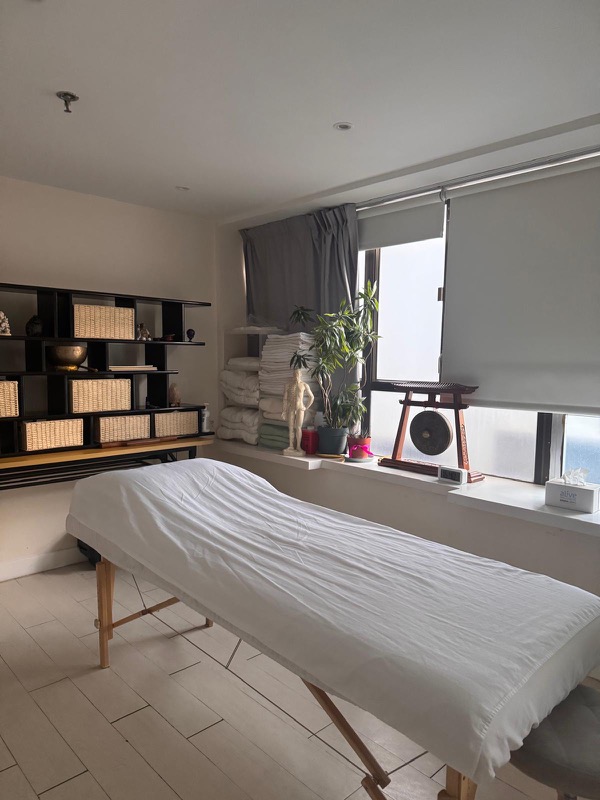
Soma by Faith Lantz treatment room, Central Hong Kong

What Craniosacral Therapy Can Help With

CST is used for a wide range of conditions, from the clearly physical to the clearly nervous-system-related. What they share is that they all involve some form of held tension the body has not been able to resolve on its own.

Chronic Headaches & Migraines

Many headaches originate in tension patterns in the cranial membranes and fascial restrictions around the occiput, jaw, and neck. CST directly addresses these patterns with consistent clinical results.

Neck & Back Pain

Chronic musculoskeletal pain often involves a nervous system that has learned to stay in protective tension. CST works at the level of the nervous system, not just the muscle, which is why its effects on pain tend to last.

Jaw Tension & TMJ

The temporomandibular joint connects directly to the cranial membranes and to the emotional holding patterns of the face and throat. CST can release jaw tension that other treatments have not been able to reach.

Stress & Burnout

CST is one of the most reliable tools available for shifting a chronically activated nervous system into genuine parasympathetic rest. For people who cannot "switch off," this can feel like the first real exhale in years.

Trauma & Shock

Through SomatoEmotional Release and gentle nervous system work, CST can help the body process experiences that were too overwhelming to fully integrate at the time, without requiring verbal processing or re-telling.

Post-Concussion & Whiplash

The craniosacral system is directly involved in the aftermath of head and neck injuries. CST can help normalise intracranial pressure patterns and tissue restrictions that persist after the initial injury has healed.

Infant Health / MotherBody

Birth places significant mechanical force through a newborn's skull. CST can resolve cranial strain patterns affecting feeding, sleeping, digestive comfort, and general settling in the early weeks of life.

Anxiety & Nervous System Dysregulation

CST works directly with the vagus nerve and the autonomic nervous system. For people with anxiety, hypervigilance, or a nervous system that has learned to treat normal life as dangerous, CST works at a level that cognitive approaches cannot always reach.

What Happens in a Session

Sessions are unhurried. You stay fully clothed. There is no manipulation, no cracking, no deep pressure. What there is, is a quality of attention that most bodies have not often experienced, and an invitation to actually rest.

  1. Arrival & Conversation

    We begin with a conversation: what brings you, what you have noticed in your body, what you are hoping for, any relevant history. This is not intake paperwork. It is the beginning of listening, before hands are involved.

  2. Settling on the Table

    You lie fully clothed on a treatment table, usually on your back to start. No oil, no undressing. The room is quiet. Sessions begin with a moment of simply arriving: letting the nervous system register that it is safe to be here.

  3. Initial Listening

    Contact is placed, usually starting at the feet or the base of the skull, with a pressure of roughly five grams. This is the palpation phase: listening to the craniosacral rhythm, noticing asymmetries, feeling for where the body is holding and where it is moving freely.

  4. The Work

    Following what the rhythm shows, contact moves through the body. Technique and listening alternate according to what the session calls for: sometimes specific releases at the skull, jaw, spine, or diaphragms; sometimes long periods of pure listening contact. The body leads. You may feel heat, pulsing, softening, emotion, imagery, or very little at all. All of it is information.

  5. Integration & Close

    Sessions end with a period of integration, the body settling into whatever has shifted. We take time at the end to reflect on what you noticed, what questions you have, and what to pay attention to in the days that follow. Effects can continue to unfold for 24–72 hours after a session.

Practical Details
  • Session length: 75 minutes (including opening conversation and close)
  • Fully clothed. Wear comfortable layers you can relax in
  • Location: Central, Hong Kong (address confirmed at booking)
  • Frequency: weekly or fortnightly to start; less frequent as the body stabilises
  • Booking: via WhatsApp. Faith responds personally

Questions People Often Bring

The most common questions about craniosacral therapy, answered honestly, including the parts where the answer is "we don't fully know."

Central, Hong Kong · Booking via WhatsApp

Ready to Experience This for Yourself?

Sessions in Central Hong Kong. Reach out via WhatsApp to ask a question or book directly. Faith responds personally.

Message Faith on WhatsApp