Rebirthing Breathwork · Hong Kong

Rebirthing Breathwork in Hong Kong

Rebirthing Breathwork is one of the oldest forms of conscious breathing practice, developed by Leonard Orr in the 1970s. Using circular connected breath (no pause between inhale and exhale), sessions create an altered state in which deeply held body patterns, including what was imprinted at birth, can surface and release. Faith Lantz offers Rebirthing Breathwork in Central, Hong Kong, integrated with her craniosacral therapy and somatic practice.

At a Glance

Rebirthing uses circular breathing to access and release patterns held in the body, sometimes since before you had words for them.

  • Developed by Leonard Orr in the early 1970s in California
  • Works through circular breathing, with no pause between inhale and exhale
  • Can access pre-verbal, body-stored patterns including birth imprints
  • Sessions are 60–90 minutes; Faith integrates this with CST and SE work
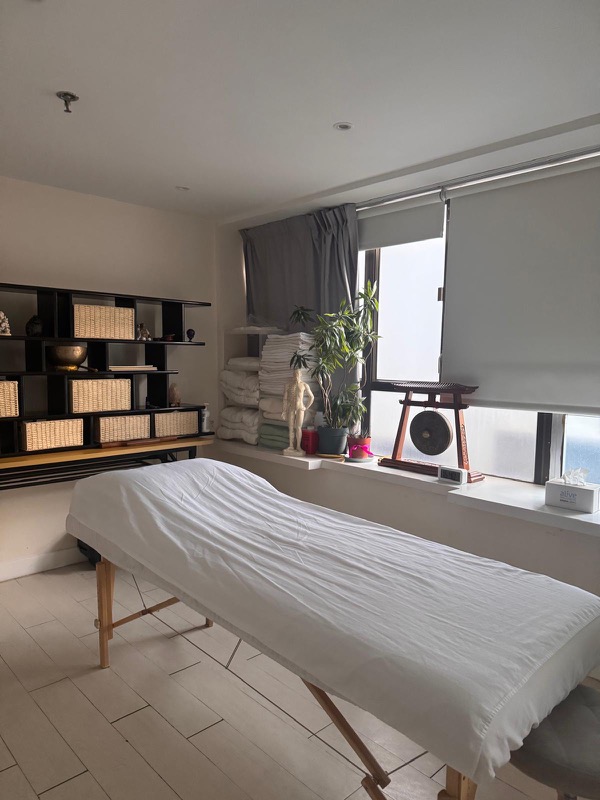
Treatment room for Rebirthing Breathwork sessions at Soma by Faith Lantz, Central Hong Kong

Origins

Leonard Orr & The Origins

Rebirthing has an unusual origin story: discovered in a bathtub, refined over decades, and built on a radical insight about what the breath can access.

Leonard Orr
1937 – 2019

American spiritual teacher and founder of Rebirthing. Born in New York, raised in upstate New York. He started the Rebirthing movement in the early 1970s in California. Author of over 20 books including Rebirthing in the New Age (with Sondra Ray, 1977) and Breaking the Death Habit (1998). He founded Rebirthing International and trained thousands of practitioners worldwide.

The discovery. Orr reported that in 1962, while soaking in a bathtub, he spontaneously began breathing in a circular pattern and entered an altered state that felt like it was reaching back to his own birth. He spent years experimenting with this, developing what would become Rebirthing: the conscious use of circular connected breathing to access and integrate deeply held patterns.

The first breath carries a charge. Orr's insight was that how we arrived into life (welcomed or frightened, with clear air or chaos) is not just a historical fact but a living pattern still operating in the nervous system.

The birth trauma insight. Orr's core hypothesis, informed by psychiatrist Stanislav Grof's earlier research with LSD (which he stopped when it became illegal, developing Holotropic Breathwork instead), was that the birth process leaves an imprint on the nervous system and psyche. Particularly the first breath: was it welcomed or frightening? Was there oxygen immediately available? Was there cold air and bright lights and separation? Orr believed these early imprints continue to shape patterns throughout life, and that conscious connected breathing can access and integrate them.

Related but distinct traditions


Mechanism

How Rebirthing Works

The mechanism is simple: circular breathing creates physiological and neurological conditions in which the body's held patterns (emotional, somatic, pre-verbal) can come to the surface and resolve.

Circular Connected Breathing

The key technique: inhaling and exhaling continuously, with no pause between them. The breath forms an unbroken circle. This is not hyperventilation in the clinical sense. It is controlled, conscious, and continuous. The rhythm itself shifts the body's state.

Physiological Shift

Circular breathing gradually shifts the CO₂/O₂ balance. This produces mild alkalosis and has direct effects on the nervous system: tingling sensations, changes in muscle tone, emotional activation. These are normal and expected, not symptoms of something going wrong.

Tetanic Response

Some people experience temporary tingling, numbness, or muscle cramping (particularly in hands and feet). This is a normal physiological response to the altered breathing chemistry. It passes as the breath integrates. Experienced in a held, supported space, it becomes information rather than emergency.

Accessing Pre-Verbal Material

The altered state created by circular breathing can reach body-stored material that predates language. Birth imprints, early developmental patterns, implicit memories. These are held as body sensation, not as stories, and the breathwork meets them there.

The Integration Response

As the session progresses and the breath deepens, the body often moves toward a deep settling: a parasympathetic response, tears or emotional release, sometimes simply quiet. This integration is the point. The body completes something.

The Role of the Practitioner

Rebirthing is not done alone. The practitioner holds the space: tracking the client's breath, offering presence and guidance, supporting what arises without directing it. Their role is the same as in craniosacral work, witness and holder, not fixer.

"The breath is the only physiological function that is both voluntary and involuntary. It connects the conscious mind to the body's depths."


Research & Evidence

The Science

The physiological mechanisms of breathwork are well-documented. The therapeutic applications are an emerging area of research, building on decades of clinical observation.

Stanislav Grof, MD 1975–2010
Realms of the Human Unconscious (1975) · The Holotropic Mind (1992)

Grof's decades of research (first with LSD, then with breathing) mapped what he called "non-ordinary states of consciousness." His work established that breath can access perinatal and pre-verbal material. It is the reference point for all conscious breathing therapies.

Brown & Gerbarg 2005
Sudarshan Kriya Yogic Breathing in the Treatment of Stress, Anxiety, and Depression

Published in the Journal of Alternative and Complementary Medicine. Study on Sudarshan Kriya, a structured breathing practice. Demonstrated significant effects on ANS balance, cortisol levels, and depressive symptoms. Early research establishing breathing's effect on autonomic regulation.

Zaccaro et al. 2018
How Breath-Control Can Change Your Life: A Systematic Review on Psycho-Physiological Correlates of Slow Breathing

Published in Frontiers in Human Neuroscience. Systematic review of slow-paced breathing's effects on central and autonomic nervous systems. Demonstrated improvements in HRV, baroreflex sensitivity, and reduction in sympathetic activity. Clear physiological mechanism for how breath affects the nervous system.

Rhinewine & Williams 2007
Holotropic Breathwork: The Potential Role of a Prolonged, Voluntary Hyperventilation Procedure as an Adjunct to Psychotherapy

Published in the Journal of Alternative and Complementary Medicine. Review of Holotropic Breathwork research. Reported significant improvements in self-reported wellbeing, reduced death anxiety, increased personal meaning. The closest research base to Rebirthing's scope and method.

Porges, Stephen, PhD 1994–2011
Polyvagal Theory: The Vagal Brake and Autonomic Nervous System Regulation

Provides the neuroanatomical framework: the vagus nerve is the key pathway through which breathing affects the nervous system. Slow, conscious breathing directly activates the ventral vagal system, the social engagement system, the pathway to felt safety. Breathing is the fastest way to shift autonomic state.

Van der Kolk, Bessel, MD 2014
The Body Keeps the Score: Brain, Mind, and Body in the Healing of Trauma

Documents that trauma is stored as body and procedural memory. Breath is one of the few tools that directly accesses this level, bypassing the cognitive and getting into the body's own memory system. Useful context for understanding why breathwork works where talking doesn't.

Rebirthing specifically has a limited RCT evidence base. The physiological mechanisms of circular breathing are well-understood. The therapeutic applications draw on a large body of clinical observation and on research from adjacent breathwork traditions (Holotropic Breathwork, Sudarshan Kriya). More rigorous research specific to Rebirthing is needed, and what we have from adjacent traditions is compelling.

Depth & Dimension

The Spiritual Dimension

Breathwork carries something that other therapies often don't: a direct, embodied encounter with the edge of what the ordinary mind can hold. For many people, it is deeply spiritual, not because it is designed to be, but because of what it reaches.

The breath is the one physiological function that connects the voluntary and the involuntary, consciously controlled but never fully separate from the autonomic system. Ancient traditions have always understood this. The Hebrew word ruach means both "breath" and "spirit." The Greek pneuma carries the same double meaning. Pranayama (breath extension in yoga) has been a doorway to altered states for thousands of years. The connection is not metaphor. It is anatomy.

Orr's own framework was deeply spiritual. He developed a philosophy he called "Immortalism," which went in directions beyond most practitioners' focus. Faith's orientation is somatic-therapeutic: she honours the spiritual dimension of breath without requiring any particular belief system. You do not need to believe anything for the body to respond to circular breathing.

What breathwork reliably touches: the sense that there is more to the body than we ordinarily have access to. Pre-verbal experience. Patterns older than the stories we tell about ourselves. For many people, this opens a different relationship with the body and with life. Not a conclusion. An opening.

The body as witness. Breathwork sessions often produce a quality of deep self-witnessing, seeing the patterns without being caught in them. This is not insight in the cognitive sense. It is a felt shift in perspective. The difference between looking at a storm and being inside it.


How Faith Practises Rebirthing

Faith's approach integrates Rebirthing with her craniosacral and somatic training. The modalities inform each other, and together they reach more than any one approach alone.

Training. Rebirthing Breathwork, integrated with Upledger CST and Somatic Experiencing. These are not separate tools. They form a single orientation toward the body as the site of healing.

In practice. Rebirthing sessions are sometimes standalone, more often they are part of a series with CST and SE work. Breathwork can open patterns that the body then integrates through touch in subsequent craniosacral sessions. The two inform each other: what surfaces in a breathwork session often becomes the living material for the next CST session.

Who she works with. Adults seeking access to pre-verbal patterns; those who feel stuck in ways that talking hasn't shifted; people curious about altered states in a safe, held container. She does not work with specific contraindicated populations. See the Safety section below.

Session format. The client lies comfortably on a treatment table. Faith guides the breath pattern, holds the space, tracks what arises. 60–90 minutes. A short integration conversation follows.

Location. Central, Hong Kong. Address confirmed on enquiry.

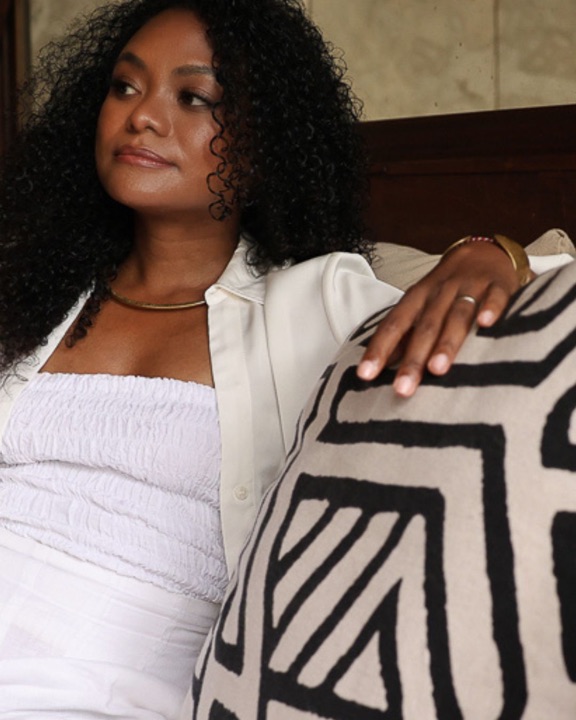
Faith Lantz, somatic therapist and Rebirthing Breathwork practitioner in Hong Kong

Applications

What Rebirthing Breathwork Can Help With

Breathwork reaches what talking often doesn't. These are the areas where people most commonly find it moves something that has been stuck.

Birth trauma and early imprints

Patterns laid down before memory, in the birth process, the first hours of life, the earliest months. Rebirthing was developed specifically to access this layer.

Patterns that feel deeply ingrained and pre-verbal

When you know something intellectually but the body hasn't caught up, when insight alone hasn't shifted the pattern. Breathwork works at a different level.

Chronic stress and nervous system dysregulation

A body that can't fully relax; a nervous system that stays alert even when nothing is wrong. Circular breathing directly addresses autonomic state.

Anxiety and chronic hyperactivation

The breath is the fastest route to the nervous system. What has been activated can settle, through the breath, not around it.

Grief and loss held without release

Grief that has been held tight, managed, pushed through. Breathwork creates conditions in which what has been waiting to move can finally move.

Creative blocks and living at partial capacity

The sense of a ceiling, of not fully arriving in your own life. Often, there is something the body is holding that is keeping part of you offline.

Spiritual emergence and deep curiosity

For people drawn to exploring what the body holds, what altered states can reveal, or who are in a significant life transition and want to work at depth.

Integration after other therapeutic work

Following CST, SE, or psychotherapy, breathwork can open the next layer, or help consolidate what previous work has loosened.


What to Expect

What Happens in a Session

A Rebirthing session is not complicated. It is simple, in the way that depth is simple. Here is what a session with Faith looks like.

  1. We talk briefly before, about what's present for you today, your history with breathwork, any questions or concerns. There is no pressure to arrive knowing what you need. Curiosity is enough.

  2. You lie down comfortably on the treatment table, fully clothed. You do not need to do anything to prepare.

  3. I guide you into the circular breathing pattern, inhale and exhale continuously with no pause between them. We start gently, building the rhythm together until it feels established.

  4. We breathe together for 45–60 minutes. I hold the space, tracking what arises in your body, offering gentle guidance if needed, staying close. You are never alone in the process.

  5. The breath naturally shifts into a deeper settling. This is the integration. We rest here. The body does what it needs to do. There is nothing to make happen.

  6. After: a short conversation. Water. Time to return to yourself before leaving. The work continues in the days following, integration happens in the space after the session as much as during it.

First sessions are often exploratory, learning the breath pattern, noticing what arises without needing to go anywhere in particular. Deeper material tends to come in subsequent sessions as trust builds. There is no right way for a session to go.


Safety & Contraindications

Safety

Rebirthing Breathwork is generally safe when practised with a trained practitioner in a supported environment. The physiological effects (tingling, emotional activation, altered states) are normal and transient.

Please let Faith know before booking if any of the following apply

These are not necessarily absolute contraindications. They are the starting point for a conversation. If you are unsure, send a message. That conversation is always welcome, and it takes ten minutes.

Faith does not work with people with significant psychiatric history in isolation. She works in communication with existing clinical support where appropriate. Safety is the frame everything else sits inside.


Questions

Frequently Asked Questions

The questions people most often bring before their first session.

Soma by Faith Lantz · Central, Hong Kong

Ready to breathe?

Send a message on WhatsApp, tell me what's brought you here, or ask any questions first. First conversations are always welcome.

Message on WhatsApp →