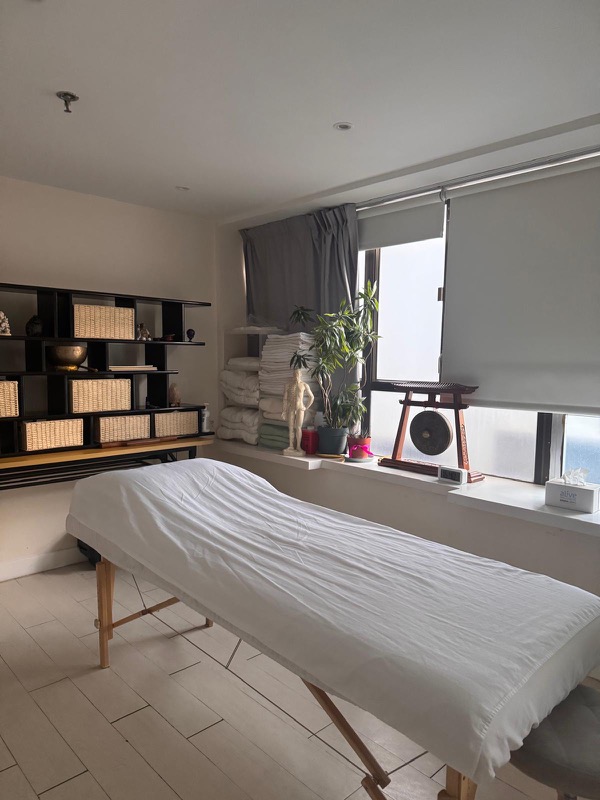
The nervous system is the key. The autonomic nervous system governs our responses to the world: safety, threat, social engagement, shutdown. When it gets stuck in a pattern, symptoms follow: chronic tension, anxiety, insomnia, dissociation, pain that has no clear physical origin. These are not problems of will or thinking. They are patterns held in the body's regulatory systems.
The nervous system doesn't speak in language. It speaks in sensation: the tightening in the chest, the jaw that won't unclench, the back that seizes. This is why talking alone doesn't always shift the pattern. You can understand something completely and still feel it in your body. Somatic therapy addresses the autonomic nervous system directly, through sensation, movement impulse, and body awareness, not primarily through the mind's account of things.
Interoception, the body's internal sense of itself, is the primary channel. Research by A.D. Craig (2002) established that the insular cortex, which processes interoceptive signals, is central to both body awareness and emotional regulation. The more connected we are to internal sensation, the more capacity we have to regulate our own state. Somatic work builds this connection.
The session doesn't require the client to "do" anything demanding. There is no performance, no correct emotional response, no story that needs to be told. The practitioner follows what the body offers, creates the conditions for the nervous system to settle and reorganise, and tracks what changes. The work happens at the level of the nervous system, often quietly, often slowly, always with the body as the guide.